
Exploring the Process of Key Cutting
Luckey Lock · June 19, 2018 · 6 min read
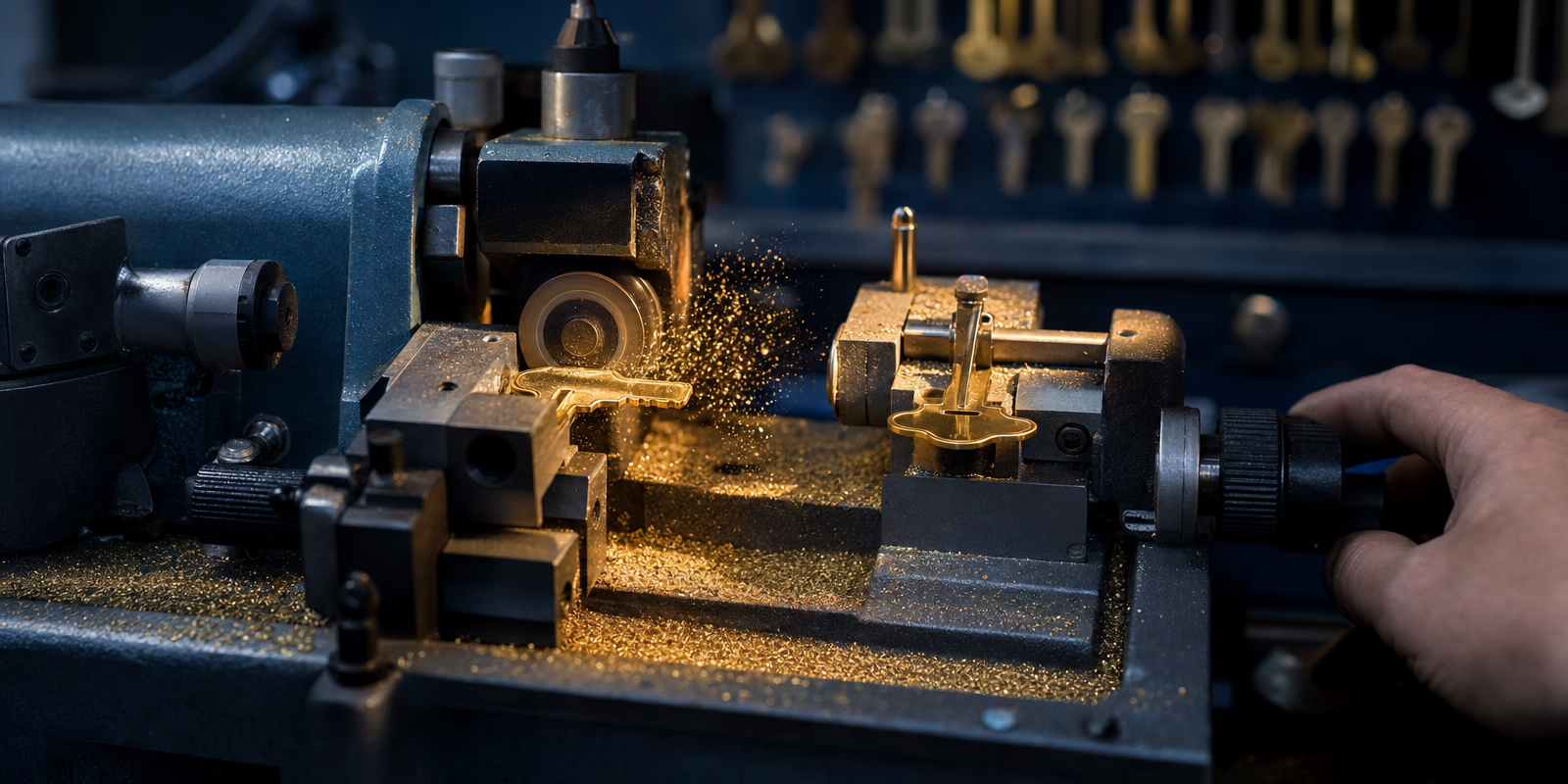
Key cutting looks like one of the simplest things a locksmith does. You hand over a key, a machine whirs for half a minute, and you walk out with a copy. What is actually happening in that half minute is a precise piece of machining, and the difference between a key that turns for the next ten years and a key that chews up your lock is measured in fractions of a millimetre. Here is what the process really involves.
Every new key starts life as a blank: a flat piece of metal shaped to fit a particular family of locks, with the profile along its spine but none of the grooves and valleys that actually operate the mechanism. The machine's job is to carve those cuts into the blank until it matches the original exactly.
There are four kinds of key cutting machine in general use, and each one gets to the same result a different way.
The four types of key cutting machine.
| Type | How it works | Where you see it |
|---|---|---|
| Manual | The locksmith clamps the original and the blank side by side, then guides a tracing stylus along the original while the cutting wheel mirrors that path into the blank. The operator controls the feed by hand. | The most common machine, and still the fastest way to copy a standard house or padlock key. |
| Automatic | The same tracing principle, but the machine drives the carriage itself once the keys are clamped and aligned, so the cut is consistent from key to key. | The other common machine, used where volume and repeatability matter. |
| Code design | No original is traced at all. The locksmith enters a key code and the machine cuts the blank to the exact depths and spacing that code specifies. | When the original key is lost, or when a key has to be made to match a lock rather than another key. |
| Laser | A cutter mills a track into the face of the blank rather than notches into its edge, producing the sidewinder style key used by many manufacturers. | Modern vehicle keys and some high-security cylinders. |
Manual and automatic machines cover the large majority of everyday work. The other two exist because sometimes there is no key to copy, and sometimes the key is not a simple notched blade at all.
Tracing a key requires a key to trace. When every copy is gone, the locksmith works from a key code instead: a number that specifies the exact depth of each cut and the spacing between them. Feed that code into a code cutting machine and it produces a working key from a bare blank, without an original ever being involved.
The useful part is that the code can usually be recovered from the lock itself. A locksmith can read or decode the cylinder and determine what the key must look like, which is why losing every key to a door does not automatically mean replacing the lock. It is the standard answer to the all keys lost situation for homes, businesses, and vehicles alike.
A copy of a copy drifts
Every traced duplicate carries a small amount of error, and a copy made from a copy inherits it and adds more. After a few generations you get a key that sticks, needs jiggling, or works in one lock but not its twin. Cutting a fresh key to code, rather than copying your worn spare, resets that drift.
This is the part that surprises people most often. On almost every vehicle built in the last couple of decades, cutting the blade is only half the job. The key also carries a transponder chip, or is a proximity fob with no blade to speak of, and the vehicle will not start until that chip has been programmed to the car's immobiliser. A perfectly cut key that has not been programmed will open the door and turn in the ignition, and the engine will still refuse to run.
So an automotive key is really two pieces of work: a mechanical one, cutting or milling the blade to the vehicle's code, and an electronic one, pairing the chip to that specific vehicle. Both have to be done before you drive away. That is why a hardware store counter can copy your house key in a minute but cannot help with your car, and it is the work our automotive locksmith service is set up to do on site, at the vehicle, out of the van.
Restricted and high-security keys
Some keys are deliberately hard to duplicate. Restricted and patented keyways, common on commercial master key systems, use blanks that are only supplied to authorized locksmiths, and copies are cut only for people on the authorization list. If your key is stamped do not duplicate, that is often what is going on, and it is a feature: it stops a departing employee from quietly making themselves a spare.
Key cutting machines are precise tools with an exposed cutting wheel spinning at speed, and they are unforgiving in both directions. Used without training they are a genuine injury risk, and there is no reason to experiment with one. Do not attempt to use key cutting equipment you have not been trained on.
A badly cut key does more damage than most people expect:
A trained locksmith picks the correct blank, cuts to the right depths, deburrs the finished key, and then tests it in the actual lock before handing it over. That last step is the one that gets skipped everywhere else, and it is the one that tells you whether the key is right. Whether it is spare keys for a home, a set for a business, or a key made from scratch after every copy went missing, we cut it, test it, and only then call it done.
Yes. When there is no key to copy, a locksmith can determine the key code from the lock itself and cut a new key to that code on a code machine. It is the usual solution when every key has been lost, for a house, a business, or a vehicle.
Copying a standard house or padlock key from an original takes a couple of minutes. Cutting to code takes longer because the lock or vehicle has to be decoded first, and an automotive key adds programming time on top of the cutting. We give you a firm quote before the work begins so you know what you are looking at.
Most can. The exceptions are restricted and patented keyways, where the blanks are only released to authorized locksmiths and copies are cut only for people on the system's authorization list. That restriction exists on purpose, to keep unauthorized spares from circulating.
Because the blade has been cut but the transponder chip has not been programmed to your vehicle. The immobiliser will not release until the key is paired to the car. Cutting and programming are two separate jobs and both are needed before the key works fully.
Need a key cut, copied, or made from scratch?
House keys, business keys, and vehicle keys including cutting and programming. We work out of fully equipped vans, so most of it happens right where you are.
Get a quoteAbout Luckey Lock
Luckey Lock
Luckey Lock is a locksmith serving Calgary, Alberta, available 24 hours a day, 7 days a week. Our locksmiths work out of fully equipped vans, so most automotive, residential, and commercial work is finished on site. Luckey Lock is owned and operated by Ido Shlomovich, an Alberta Certified Journeyperson in the locksmith trade, Certificate 244189A, issued under the Skilled Trades and Apprenticeship Education Act.
Why a perfectly cut car key still will not start the engine, what the immobiliser is doing, and what happens during a programming appointment.
Calling a locksmith puts you in a vulnerable position. Six checks that separate an honest Calgary locksmith from one who will hold your door hostage.