
Transponder Key Programming, Explained
Luckey Lock · January 15, 2026 · 7 min read
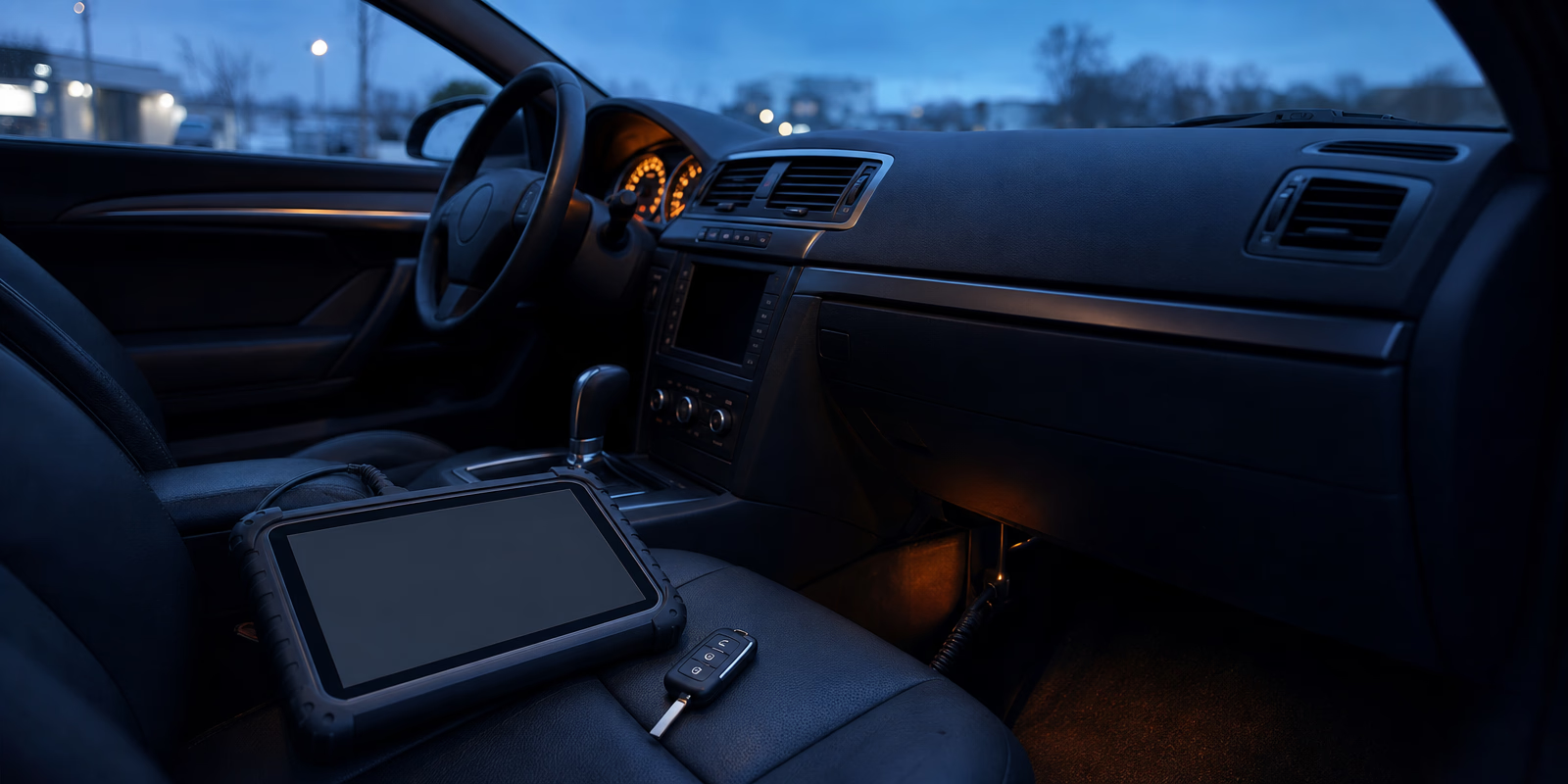
The call goes like this. Someone had a key copied at a kiosk, it opens the doors, it turns in the ignition, and the engine will not start. They are convinced the key was cut wrong. It usually was not. The blade is fine. The car does not believe the key is allowed to be there.
That gap between a key that fits and a key that works is the transponder system, and understanding it takes about five minutes.
Inside the plastic head of most car keys made in the last twenty-five years is a small chip with no battery in it. It is a passive transponder: a tiny antenna and a memory. It does nothing at all until it is close to the car.
When you put the key in the ignition or bring the fob into the cabin, a coil in the vehicle emits a radio field. That field is enough to power the chip for an instant. The chip wakes up, exchanges data with the car, and goes back to sleep. That is why a transponder key never needs its own battery, and why a fob with a dead battery for the remote buttons will often still start the car when you hold it against the start button.
The other half of the system is the immobiliser: a control module in the vehicle holding a list of the key identities that are authorized to start this specific car. When the chip answers, the immobiliser checks it against that list. If it matches, the module releases the engine controller and the car starts normally. If it does not, the vehicle behaves in a very particular way that most people recognize once it is described.
The classic symptoms of an unrecognized key:
None of that is a fault. It is the anti-theft system doing precisely what it was designed to do, which is to make a car very hard to steal by turning the ignition with a copied blade.
The security is why the copy shop cannot help you
A hardware counter can trace your house key in ninety seconds because a house lock has no opinion about who made the key. A car has an opinion, and it stores it in a control module. Adding a key to that module is skilled, equipment-dependent work, which is why automotive keys sit with a locksmith or a dealer rather than a kiosk.
The mechanical half and the electronic half.
| The job | What it accomplishes | What it does not do |
|---|---|---|
| Cutting the blade | Lets the key enter the lock cylinder and turn it, which opens the doors and operates the ignition switch. | It does not give the vehicle permission to start. |
| Programming the chip | Adds the key's identity to the immobiliser's authorized list so the engine controller is released. | It does nothing about whether the blade physically fits. |
Both halves have to be right. A programmed key with a bad cut will not turn the ignition, and a perfectly cut key with no programming will not start the engine. Our piece on how key cutting works covers the mechanical side in more depth.
There is less mystery here than the phrase suggests. It happens at the vehicle, and for most cars it is a fairly short visit.
The usual sequence:
Bring every key you own to the appointment
Some vehicles rewrite the whole authorized list during programming rather than appending to it, which means any key not present at the appointment stops working. If your partner has the second key at the office, that matters. Mentioning it when you book takes ten seconds and prevents a second call-out.
Manufacturers made different choices about how tightly to lock the immobiliser down, and those choices show up as time. Some systems accept a new key through a straightforward procedure within a few minutes. Others require a security code obtained through a controlled channel before the module will listen at all. A number of makes enforce a deliberate delay, sometimes measured in several minutes or considerably longer, during which the technician has to stay with the vehicle and wait.
There is also a real difference between adding a key when you already have one and programming a key when every key is gone. The first can often use the existing key as authorization. The second means the vehicle has to be persuaded to accept a key with nothing currently trusted, which is a deeper procedure. That case gets its own walkthrough in losing every car key.
A push button start vehicle uses the same principle with more range. Instead of a coil in the ignition barrel, antennas around the cabin detect the fob when it is inside the car, and the immobiliser check happens without you doing anything. The fob has a battery, but that battery is for the remote buttons and the longer range detection, not for the transponder function, which is why a fob with a flat battery usually still starts the car when held against the marked spot on the steering column or the start button.
Programming a proximity fob involves the same conversation with the immobiliser, plus pairing the keyless entry side. It is the most involved version of this job, and it is the reason a smart fob and a basic transponder key are not quoted the same way. That breakdown is in what drives the cost of a car key replacement.
The blade was cut correctly but the chip has not been added to the vehicle's immobiliser. The car reads the chip, does not recognize it, and refuses to release the engine. The key needs programming, which is a separate job from cutting.
The transponder chip itself does not. It is powered by the radio field the vehicle produces. Any battery in the key is for the remote lock buttons and, on a proximity fob, for keyless detection at a distance.
For most vehicles, yes. Programming equipment connects at the vehicle's diagnostic port, so it happens where the car is parked. A small number of very new or restricted systems still need a dealer, and we will tell you on the phone if yours is one.
On some vehicles it can, because the procedure rewrites the authorized list rather than adding to it. Bring every key you own to the appointment and mention any that exist elsewhere when you book.
If you have a key that turns but will not start the car, or you want a spare programmed before you need it, call (587) 966-5625. We cut and program automotive keys at the vehicle, anywhere in Calgary, 24 hours a day, with a firm quote before the work begins.
Need a car key cut and programmed?
Call (587) 966-5625 with your make, model, and year. Mobile automotive locksmiths across Calgary, day or night.
Get a quoteAbout Luckey Lock
Luckey Lock
Luckey Lock is a locksmith serving Calgary, Alberta, available 24 hours a day, 7 days a week. Our locksmiths work out of fully equipped vans, so most automotive, residential, and commercial work is finished on site. Luckey Lock is owned and operated by Ido Shlomovich, an Alberta Certified Journeyperson in the locksmith trade, Certificate 244189A, issued under the Skilled Trades and Apprenticeship Education Act.
Replacement car key quotes vary wildly between vehicles. Here are the factors that actually move the number, and the questions to ask before you book.
The all keys lost appointment, step by step: what a locksmith needs from you, what happens at the vehicle, and why it takes longer than cutting a spare.
How a blank becomes a working key, what happens when there is no original, and why a modern car key needs more than a cut blade to start the engine.