
Deadbolt Grades: What ANSI Ratings Really Mean
Luckey Lock · February 11, 2026 · 7 min read
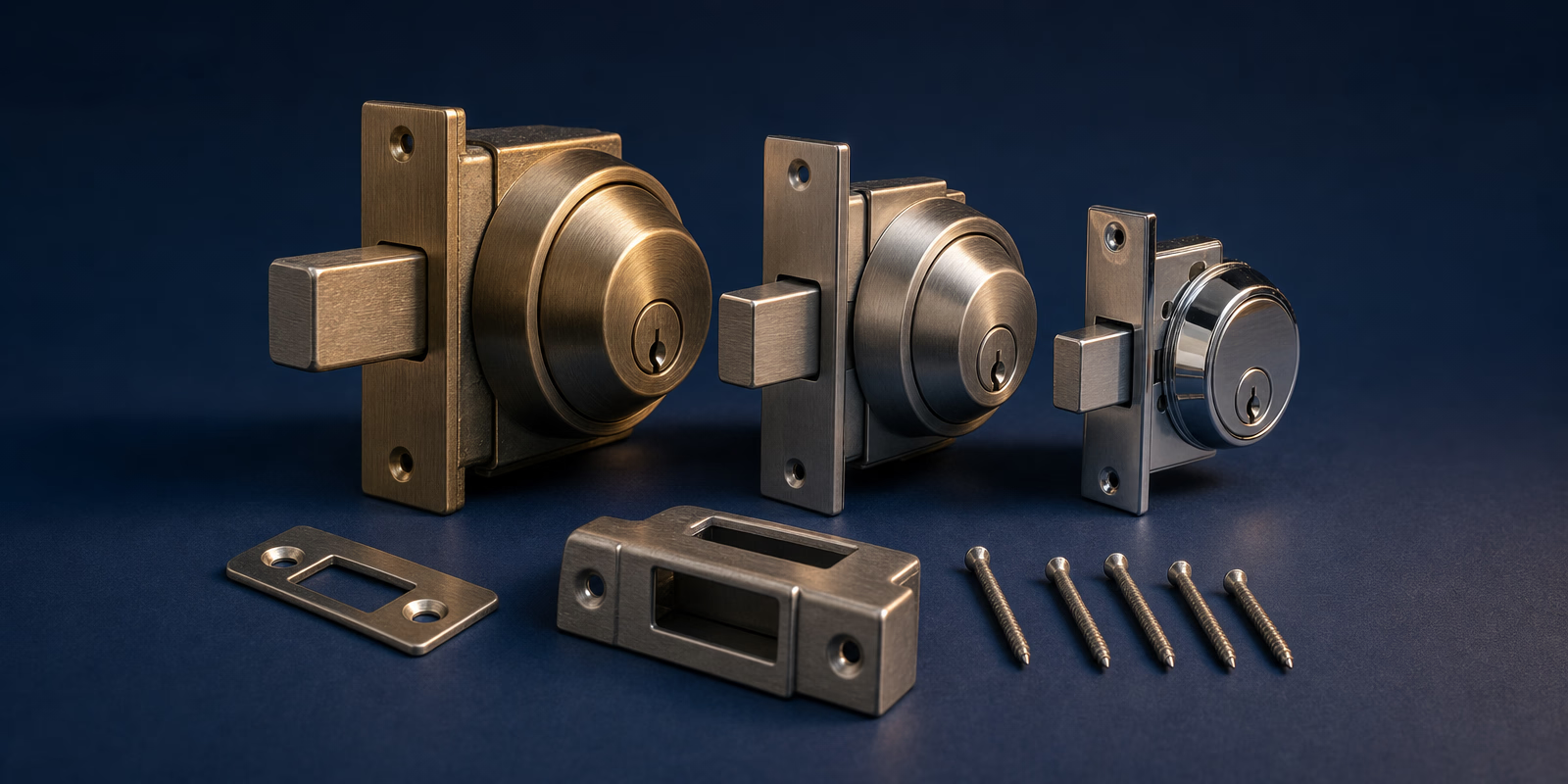
Stand in the lock aisle of any hardware store and you will find two deadbolts that look nearly identical, in the same finish, at very different prices. Somewhere on the more expensive package is a small mark that says Grade 1. On the cheaper one it says Grade 3, or it says nothing at all. That mark is doing real work, and it is worth understanding before you spend the money.
It is also worth knowing where the grade stops mattering, because there is a part of your front door that decides more about its security than the lock does.
The grades come from standards published under ANSI, the American National Standards Institute, and developed by BHMA, the Builders Hardware Manufacturers Association. Hardware is submitted to an independent laboratory and put through a defined battery of tests. Products that pass at a given level are certified to that grade.
The important word there is certified. A package that says heavy duty, maximum security, or commercial grade in marketing type is telling you nothing. A package carrying an ANSI or BHMA grade is telling you a lab put that specific product through a published procedure and it passed. Those two sentences on a box look similar and mean completely different things.
What each grade signals for a residential deadbolt.
| Grade | What it means | Where it belongs |
|---|---|---|
| Grade 1 | The most demanding tier. The hardware survives the highest number of operating cycles and the heaviest force and impact testing in the standard. | Commercial entrances, and residential front and back doors for anyone who wants the strongest option a normal budget reaches. |
| Grade 2 | A middle tier. Fewer test cycles and lower force levels than Grade 1, but still a certified product built to hold up. | A reasonable choice for most residential exterior doors, and common on quality builder hardware. |
| Grade 3 | The entry tier of the standard. It has still been tested, at the lowest thresholds the standard defines. | Interior doors, low risk outbuildings, and secondary hardware. It is thin protection for a main entrance. |
| No grade at all | The product was never submitted, or it was and did not pass. There is no way to tell which from the outside. | Nowhere on a door you care about. |
The tests behind those tiers cover three broad questions. How many times can the lock be operated before it wears out. How much force can the bolt take from the side without failing. How much impact can the assembly absorb without the door opening. Grade 1 sets the highest bar on all three, and each step down relaxes them.
You may also see a label with three letters, something like AAA or BAB. That is BHMA's consumer-facing rating, and it splits the result into three separate categories rather than one overall number: security, durability, and finish. A is the highest in each.
It is a useful label because it tells you where a product spent its budget. A lock rated highest on security and lowest on finish is a strong lock that may not stay pretty. In this climate the finish rating is worth more attention than people give it, because an exterior door in Calgary spends the year cycling between wind driven snow, spring meltwater, and August sun, and a cheap finish blisters and pits under that.
Here is the thing most homeowners are surprised to hear from a locksmith. When a residential door is forced open, the lock body is usually not what failed. The bolt is a solid piece of metal and it does not often break. What gives way is the wood: the strike plate tears out of the door jamb, taking a section of the frame with it.
That is a fixable weakness, and fixing it costs a fraction of what a Grade 1 lock costs.
The three things to check on your own front door this weekend:
Alignment is the free upgrade
A deadbolt that only throws part way because the door has shifted is giving you a fraction of the protection you paid for, and in this city doors shift constantly as the frame moves through freeze-thaw cycles. If your bolt drags, catches, or needs the door pulled toward you before it will turn, that is a service item, not a quirk. Getting the strike realigned costs very little and restores the full throw.
Beyond the grade, a few features are worth paying for on a main entrance:
A double cylinder deadbolt takes a key on both sides, with no thumbturn inside. People fit them on doors with glass panels so an intruder who breaks the glass cannot reach in and turn the bolt. The security logic is sound and the safety cost is serious: in a fire or an emergency, nobody leaves that door without finding the key first, in the dark, possibly with smoke in the room.
Building and fire code requirements vary by occupancy and by where the door sits, so check locally before fitting one, and think hard about who else uses that door. Children, guests, and older family members are the people this catches. There are usually better answers for a glass panel door, including laminated glazing or a different hardware layout, and it is worth a conversation before you install one.
If you want a short version: buy a certified deadbolt rather than an uncertified one, prefer Grade 1 on your main entrances and Grade 2 as a sensible floor elsewhere, and then spend twenty dollars and half an hour on long screws and a decent strike plate, because that is where the door actually fails. Fitting and alignment are what turn a good lock into a secure door, and both are routine work under our residential locksmith service.
On a main entrance, generally yes, because the tests behind Grade 1 are the most demanding in the standard. On an interior or low risk door, Grade 2 or Grade 3 is a reasonable choice and the money is better spent reinforcing the strike.
It means the product was not certified to the standard, or the packaging is not disclosing it. It is not automatically a bad lock, but you have nothing verifiable to go on. On a door that matters, choose a graded product.
Not on its own. If the strike plate is held by short screws into thin trim, the frame gives way before the bolt does. Long screws into the structural framing and a reinforced strike are the cheapest meaningful security improvement most homes can make.
Yes. A partly extended bolt gives you far less resistance than a fully thrown one. It usually means the door and frame have moved out of alignment, which is common here as frames shift with the seasons, and it is a quick fix for a locksmith.
If you would like someone to look at what is actually on your doors and say plainly what is worth upgrading, call (587) 966-5625. We supply and fit graded deadbolts, reinforce strikes, and correct alignment across Calgary, with a firm quote before the work starts.
Want your front door assessed properly?
Call (587) 966-5625 for deadbolt supply, installation, and strike reinforcement across Calgary. Available 24 hours a day.
Get a quoteAbout Luckey Lock
Luckey Lock
Luckey Lock is a locksmith serving Calgary, Alberta, available 24 hours a day, 7 days a week. Our locksmiths work out of fully equipped vans, so most automotive, residential, and commercial work is finished on site. Luckey Lock is owned and operated by Ido Shlomovich, an Alberta Certified Journeyperson in the locksmith trade, Certificate 244189A, issued under the Skilled Trades and Apprenticeship Education Act.
Possession day means unknown keys are still out there. When rekeying the existing locks is the right call, and when the hardware should be replaced.
What to look for in a smart lock before you buy, including how batteries and keypads behave in a Calgary winter and why a mechanical override matters.
Chinook freeze-thaw cycles are hard on locks. How to keep car and door locks from freezing, and how to thaw one safely when it happens anyway.