
Frozen Locks in a Calgary Winter: Prevent and Thaw
Luckey Lock · November 13, 2025 · 8 min read
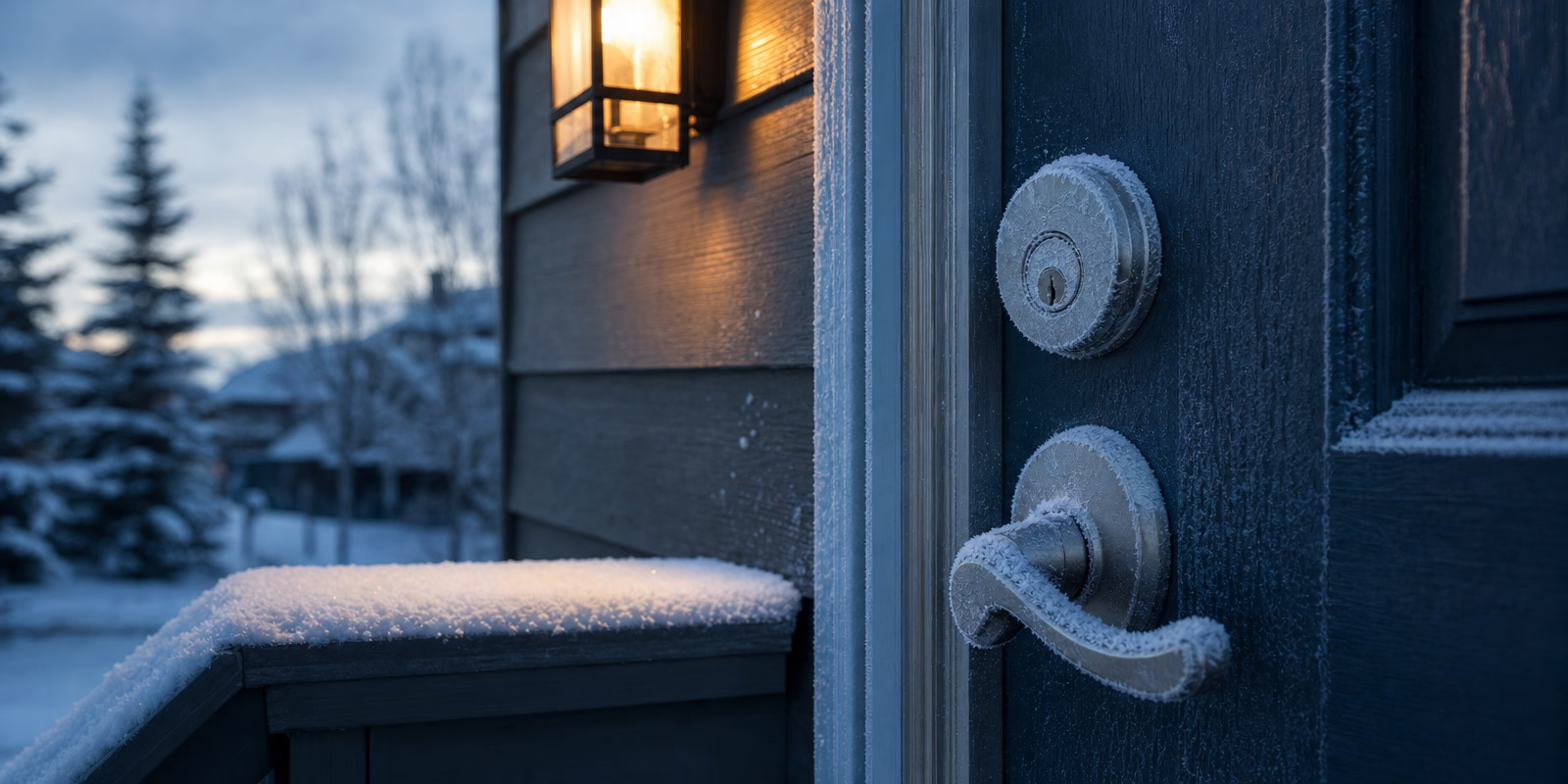
Calgary does something to locks that a steadily cold city does not. A Chinook rolls over the Rockies, the temperature climbs above freezing in an afternoon, snow melts and runs into every gap it can find, and then the wind swings back around and it is minus twenty again by morning. That water is now ice, and it is inside your lock cylinder rather than on top of it.
We get more calls about frozen locks than about almost anything else between November and March, and the majority of them are preventable with about ten minutes of work in the fall. Here is what actually helps, and, just as importantly, what people try that damages the lock or the door.
A lock cylinder is full of small parts with small gaps between them, and those gaps are exactly the size that traps moisture. Water gets in from melted snow running down a door face, from condensation where a warm interior meets a cold exterior, and on a car from a wash bay or a slush spray driven straight into the keyway.
When that water refreezes, two different things can happen. Sometimes it locks the pins in place so the key will go in but will not turn. Sometimes it fills the keyway so the key will not go in at all. On a car door, ice can also form between the rubber seal and the door frame, which means the lock works fine and the door still refuses to open, a distinction worth knowing before you start yanking on a handle.
Do this once in October and you will mostly forget about the problem:
Do not use an oil based spray lubricant in a lock
The general purpose penetrating sprays in most garages are the wrong tool here. They free a stuck lock for a day, then they attract dust and grit, thicken in the cold, and leave a residue that gums the pins. A cylinder that has been treated with one for a few seasons often needs to be cleaned out or replaced. Use a lubricant made for locks.
Work through these in order. Each one is safe for the lock, and most frozen locks give up before you reach the bottom of the list.
Hold the key in a gloved hand, or in your pocket against your body, for a minute or two. On a car key with electronics in the head, warm the blade only. Then slide the warm blade into the keyway slowly and hold it there rather than forcing it. Metal conducts heat well, and a warm blade will melt a thin plug of ice out of the way. Repeat it two or three times. This alone solves a surprising share of frozen locks.
A small bottle of commercial lock de-icer costs very little and lives in a coat pocket or a desk drawer, which is the point: it needs to be somewhere other than inside the vehicle you cannot open. Follow the directions on the bottle, give it a moment to work, then try the key gently.
Rubbing alcohol works on the same principle as commercial de-icer: it has a much lower freezing point than water and it displaces moisture. Apply a small amount into the keyway, wait, and try the key gently. Hand sanitizer works in a pinch for the same reason, though it leaves a residue to clean out afterwards. Keep alcohol off paint and finished surfaces.
For a house door in a garage or a car parked indoors, a hair dryer on a low setting held back from the surface can raise the temperature enough to release the ice. Keep it moving, keep it away from paint and plastic trim, and stop if anything gets hot to the touch. Never use an open flame near a vehicle or a door.
Never pour hot water on a frozen lock
This is the advice that circulates every winter and it is the one that causes damage. Hot water on cold metal or cold glass creates a thermal shock that can crack a windshield or a window. Worse, the water runs into the cylinder, the door seal, and the latch mechanism, and within minutes it refreezes as a much larger piece of ice than the one you started with. You have not opened the lock, you have made it worse and possibly broken something expensive.
These are the moves that turn a frozen lock into a locksmith call:
Cold weather is very good at exposing problems that were already there. A lock slightly out of alignment all summer, a latch that has needed a firm shove for months, a door that has shifted through the freeze-thaw cycles: these fail first on the coldest morning of the year, and it looks like a freezing problem.
The tell is repetition. If a lock freezes once during an extreme cold snap, that is weather. If the same lock seizes every few weeks, or if it feels gritty and stiff even at plus ten, the hardware is worn or misaligned and it needs service rather than de-icer. That kind of repair is standard work for our residential locksmith service, and it is much cheaper than replacing a door you have been shouldering open all winter.
A city that sits at minus twenty-five all winter is in some ways easier on hardware, because the moisture never becomes liquid. Calgary crosses the freezing point again and again, sometimes several times in a week, and every cycle pushes water somewhere it could not reach while frozen and then expands it once it gets there. That is what widens the gaps around a frame and lets water into cylinders that seemed sealed in November. It is also why the autumn checklist above pays for itself here more than it would somewhere with a steadier winter.
No. Hot water on cold glass or metal risks cracking the window, and the water runs into the lock and the door seal where it refreezes into a bigger blockage. Warm the key instead, or use a lock de-icer or isopropyl alcohol.
A dry lubricant made for locks, such as a graphite or PTFE based product. Avoid general purpose oil based penetrating sprays. They work briefly, then attract grit and thicken in the cold, which leaves the cylinder worse than before.
The rubber door seal has frozen to the frame. Press firmly around the edge of the door to break the ice bond, then try the handle normally instead of pulling hard on it. Treating the seals with a silicone conditioner in the fall prevents it.
Stop and call a locksmith. Trying to fish out the fragment with tweezers or a wire usually pushes it deeper and can damage the pins. Extraction is routine work with the right tools, and the lock is normally saved. Call us at (587) 966-5625.
If a lock has seized, a key has broken off, or a door will not secure in the middle of a cold snap, we answer around the clock. Call (587) 966-5625 and we will come to you, quote the work before we start, and get the door closing and locking again.
Frozen lock, broken key, or a door that will not close?
Call (587) 966-5625 any hour, any day. Mobile locksmiths across Calgary, with a firm price before the work begins.
Get a quoteAbout Luckey Lock
Luckey Lock
Luckey Lock is a locksmith serving Calgary, Alberta, available 24 hours a day, 7 days a week. Our locksmiths work out of fully equipped vans, so most automotive, residential, and commercial work is finished on site. Luckey Lock is owned and operated by Ido Shlomovich, an Alberta Certified Journeyperson in the locksmith trade, Certificate 244189A, issued under the Skilled Trades and Apprenticeship Education Act.
What to look for in a smart lock before you buy, including how batteries and keypads behave in a Calgary winter and why a mechanical override matters.
A calm order of operations for a Calgary car lockout: what to check first, when a locksmith beats a tow, and how to avoid wrecking the door.
Grade 1, Grade 2, Grade 3, and the BHMA letter ratings, explained in plain language, plus the part of your front door that matters more than the grade.