
Smart Lock Buying Guide for Calgary Homes
Luckey Lock · December 8, 2025 · 8 min read
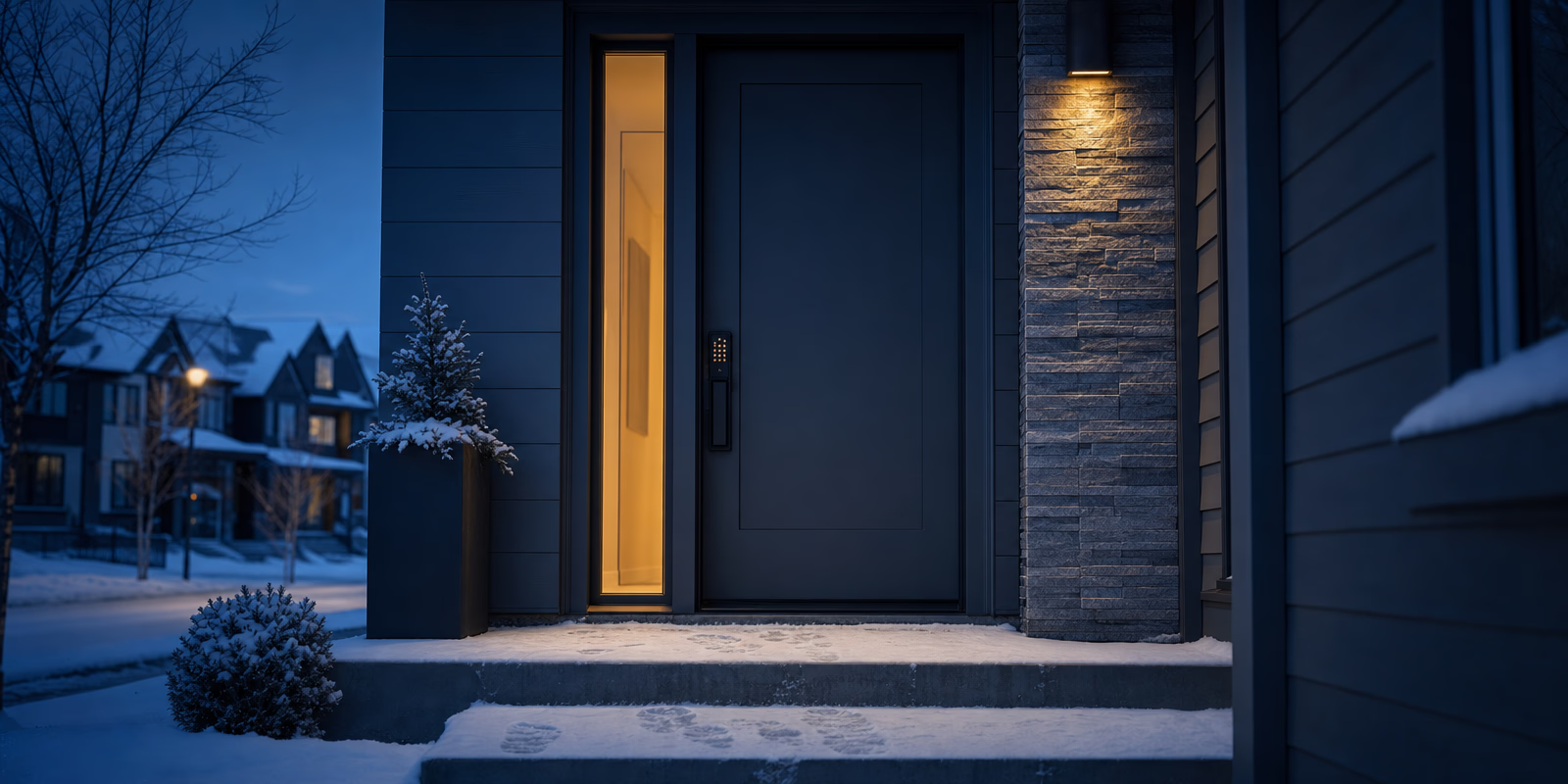
Smart locks are good products now. The early ones were unreliable and slightly silly, and the current generation is neither. But the marketing on the box is written for a mild climate, and Calgary is not one. A lock that works beautifully in a Vancouver townhouse can behave differently on a north facing front door at minus thirty with the wind coming down off the foothills.
So this guide is organized around what actually determines whether you like the lock in two years, with the winter questions given the weight they deserve here.
Every smart lock is a deadbolt with a motor and a radio bolted to it. If the deadbolt is weak, the electronics are decoration. A determined intruder is not going to hack the Bluetooth pairing, they are going to kick the door, and what stops that is the bolt, the strike plate, and the screws holding it into the framing.
Look for a lock that carries a real security grade, look at how far the bolt throws when extended, and pay attention to what strike plate and screws come in the box. A long bolt anchored into a flimsy strike held by short screws is a weak point regardless of how clever the app is. We go through the grading in detail in what deadbolt grades actually mean.
This is the part almost nobody thinks about at the store, and it is the thing Calgary owners end up talking about.
Standard alkaline cells lose a meaningful amount of their usable capacity as the temperature drops, and an exterior door lock in a cold snap is sitting in exactly those conditions. The practical result is that a lock which reported a healthy battery in October can report a low battery on the first properly cold week, and the drop can be quick rather than gradual. The battery is not defective. It is doing what alkaline chemistry does in the cold.
What to do about it:
Keep a mechanical key, and keep it somewhere sensible
Buy a smart lock that retains a physical key cylinder unless you have a very specific reason not to. A keypad-only lock with a flat battery on a Sunday night in January is a service call. The key belongs in a wallet, a purse, or with a neighbour. It does not belong in the car, because that is the other thing you might be locked out of.
Not every entry method behaves the same at minus twenty-five. Consider how you will actually use the lock while wearing winter gloves and carrying groceries.
How different unlock methods hold up in cold weather.
| Method | Cold weather behaviour |
|---|---|
| Physical push buttons | The most dependable in cold. Works through gloves, and there is a tactile click so you know the press registered. |
| Capacitive touch keypad | Often will not respond through a glove, and can behave inconsistently with frost or moisture on the surface. Fine on a sheltered door, less so on an exposed one. |
| Fingerprint reader | Cold, dry fingers read less reliably, and nobody wants to take a glove off at minus thirty. Treat it as a convenience rather than the primary method. |
| Phone app or Bluetooth | Works, but depends on your phone having charge. Cold drains phone batteries fast, and a dead phone at a keypad-only door is a lockout. |
| Physical key | Works at any temperature as long as the cylinder is not frozen, which is what a dry lubricant in the autumn is for. |
Also check the manufacturer's stated operating temperature range before buying, and compare it against a real Calgary winter rather than an average one. Some products are rated well below freezing and some are quietly not.
Auto-lock relocks the door a set number of seconds after it closes. It is a genuinely good feature and it is also the single most common way people lock themselves out of a smart lock home. You step outside in slippers to move the bin or scrape the car, the door swings shut, the timer runs out, and now you are standing on the step in the cold without a phone.
If you enable auto-lock, set the delay long enough to cover a quick trip outside, and make sure at least one other person or a neighbour can let you in. A keypad code you have memorized is the best insurance here, because it works with no phone, no key, and no gloves off.
The radio inside the lock decides what it can do when you are not standing next to it:
Before buying, check the backset and the door thickness, because smart lock bodies are chunkier than the deadbolt they replace. A door with a storm door in front of it, or a narrow stile on a glass panel door, can leave too little clearance for the interior escutcheon. Metal doors, doors with unusual bore sizes, and doors that have already been drilled for a different lock all have their own quirks.
The most common installation problem in this city is not the lock at all, it is the door. Seasonal movement through the freeze-thaw cycles leaves frames slightly out of square, and a deadbolt that needs a shove to throw against a misaligned strike will drain a smart lock's battery quickly, because the motor is fighting the door every single time. If your current deadbolt binds at all, fix the alignment before you fit a motor to it. That is standard work under our residential locksmith service, and it is worth doing first.
Check before you drill. A tenancy agreement usually requires the landlord's permission to change a lock, and many condo boards have rules about hardware on a unit door that faces a common corridor, including finish and whether the building keeps master access. Ask first, keep the original hardware, and put it back at the end of the tenancy. Landlords looking at this from the other side may want our guide to locks and tenant turnover.
Yes, with the right choices. Use lithium batteries if the manufacturer allows them, favour physical buttons over a capacitive touchpad on an exposed door, check the product's rated temperature range, and keep a mechanical key cylinder as a backup.
It depends on the model, the radio it uses, and how often the door cycles, so treat the manufacturer's estimate as an ideal condition figure. In this climate the practical answer is to replace them on a schedule each autumn rather than waiting for the low battery warning.
That is what the mechanical key is for. Many locks also have an exterior contact that accepts a portable battery pack to power the lock briefly. If you have neither, it becomes a locksmith call, and we answer at any hour on (587) 966-5625.
Not by itself. The physical resistance comes from the same deadbolt, strike plate, and screws as any other lock. What a smart lock adds is control: codes you can issue and revoke without cutting keys, and a record of who came and went.
If you want a second opinion before you buy, or you would rather have the deadbolt aligned and the smart lock fitted properly the first time, call us at (587) 966-5625. We install smart locks and conventional hardware across Calgary, and we will tell you honestly if the door needs work before the lock goes on.
Thinking about a smart lock?
Call (587) 966-5625 and talk it through with a locksmith before you buy. Supply and installation across Calgary, 24 hours a day.
Get a quoteAbout Luckey Lock
Luckey Lock
Luckey Lock is a locksmith serving Calgary, Alberta, available 24 hours a day, 7 days a week. Our locksmiths work out of fully equipped vans, so most automotive, residential, and commercial work is finished on site. Luckey Lock is owned and operated by Ido Shlomovich, an Alberta Certified Journeyperson in the locksmith trade, Certificate 244189A, issued under the Skilled Trades and Apprenticeship Education Act.
Chinook freeze-thaw cycles are hard on locks. How to keep car and door locks from freezing, and how to thaw one safely when it happens anyway.
Grade 1, Grade 2, Grade 3, and the BHMA letter ratings, explained in plain language, plus the part of your front door that matters more than the grade.
What landlords and short-term hosts should know about locks between guests and tenants: rekeying, codes, key control, and the Alberta rules to check first.