
Locks and Turnover: A Calgary Landlord's Guide
Luckey Lock · May 20, 2026 · 8 min read
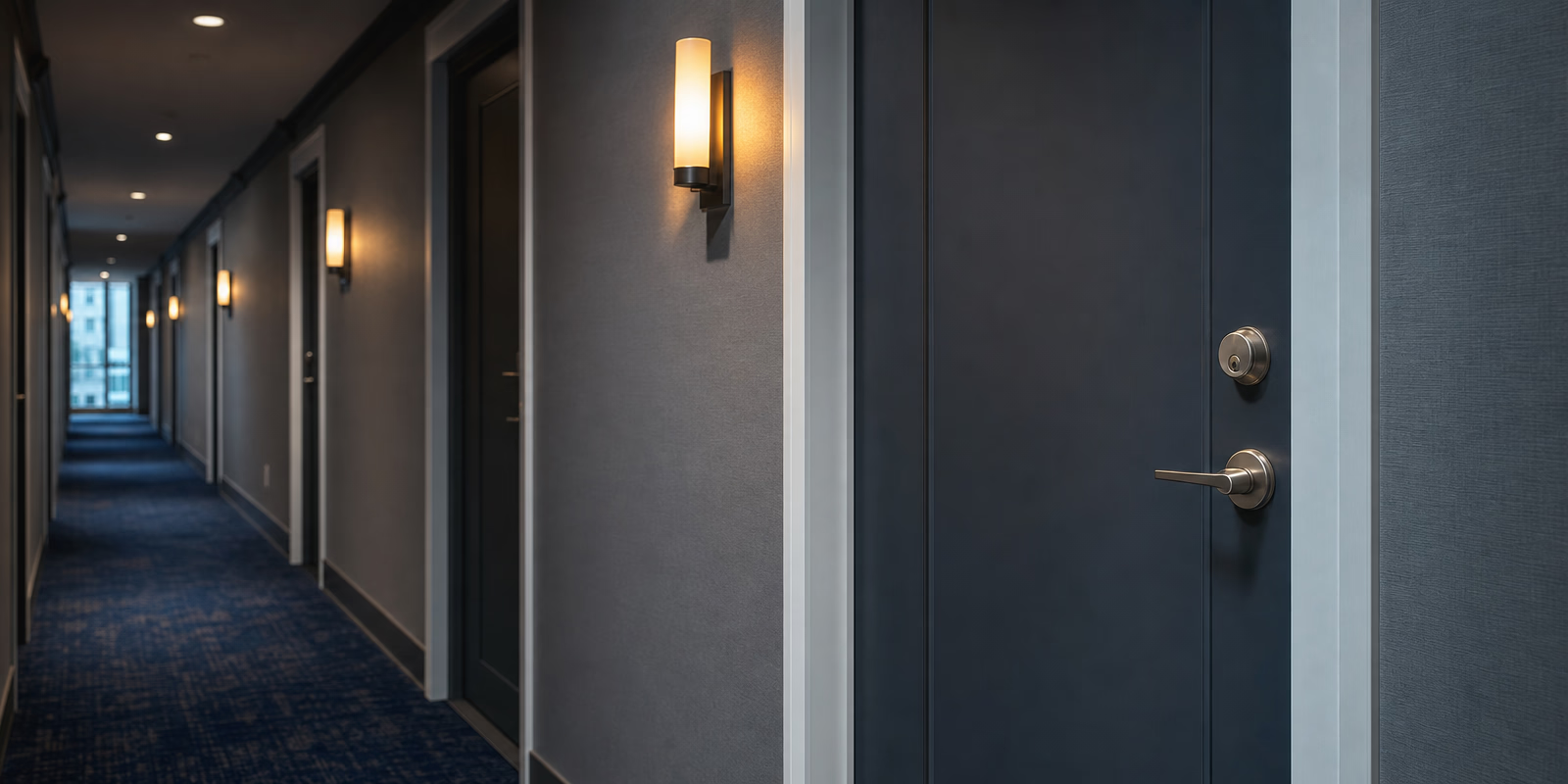
Turnover is where rental security actually lives. Everything else is a one-time decision. Turnover happens again and again, and a habit that is slightly wrong repeats itself until it becomes a genuine problem: a set of keys that never came back, a door code that four previous guests still know, a spare in a lockbox whose combination has not changed in two years.
Here is how to make the changeover boring, which is the goal, plus the Alberta specific parts worth reading before you touch a lock.
Residential tenancies in Alberta are governed by the Residential Tenancies Act, and it has things to say about both entry to a rented property and about locks. Two points matter most in practice.
What to check before making a change:
The rest of this article assumes the routine case: a unit that is vacant between occupants, which is the moment when everything is straightforward.
This is the core habit and it is the one most often skipped, usually because the outgoing tenant returned both keys and it feels unnecessary. Two keys coming back is not evidence that two keys existed. A house key can be copied at any hardware counter for pocket change, by a tenant, a partner, a roommate who was never on the lease, a friend who stayed for six weeks, or a contractor who needed access for an afternoon.
Rekeying keeps the existing hardware and changes the pin combination, which kills every key that was ever cut for that door. It is the least expensive option available and it is quick, particularly if a locksmith is doing several units in one visit. Treat it as a line item in the turnover budget in the same way as cleaning and paint. Our article on rekeying versus replacing covers when the hardware itself should be swapped instead.
Ask about rekeyable cylinders if you turn units over often
Several manufacturers make cylinders that can be re-pinned to a new key quickly using a tool and a new key, without the cylinder being stripped down. For a landlord with multiple units and regular turnover, that shortens each changeover considerably. It is worth asking a locksmith whether it suits your doors before you next replace hardware.
A long-term rental turns over once every year or two. A short-term rental can turn over weekly, and rekeying at that pace is not realistic. Codes are the answer, and codes bring their own discipline.
How to run codes properly on a short-term unit:
Retire the exterior lockbox
A key lockbox hanging on a railing is visible to everybody who passes, it announces that the unit is a rental, and the combination is rarely changed. Anyone who has ever stayed, or who watched a guest open it, retains access indefinitely. A keypad or smart lock with per-guest codes replaces it and removes the physical key entirely.
In a Calgary condo or apartment building, the unit door is only part of the story. Fobs for the lobby, the parkade, the elevator, and the amenity rooms are usually issued and controlled by the condo corporation or the property manager, not by you, and they are the credentials most likely to disappear at the end of a tenancy.
Build these into your turnover checklist:
The lock and key portion of a changeover.
| Step | Long-term tenancy | Short-term stay |
|---|---|---|
| Unit door | Rekey between tenancies | Delete the guest code at checkout |
| Keys or codes issued | Count out, log, count back in | One unique code per booking |
| Building fobs and remotes | Log by serial, report unreturned items for deactivation | Same, and never leave a spare in the unit |
| Mailbox and locker | Rekey or replace the padlock | Verify it is secured between stays |
| Garage keypad | Change the code | Change the code on a schedule |
| Hardware condition | Check bolt throw, alignment, and strike screws | Check batteries and low-battery alerts |
| Documentation | Note what was rekeyed and when | Keep the access log and review it |
First, hardware condition. A tenant who has to shoulder a door to get the deadbolt to throw will eventually stop using the deadbolt, and then you own a unit with a lock that is not being used. Calgary door frames move with the freeze-thaw cycles, so check the bolt throw and the strike alignment at every turnover. It is a two minute check and a short repair.
Second, on a multi-unit property, key control. If you hold keys to every unit on one ring in a truck, that ring is a serious liability. A restricted keyway keeps unauthorized copies out of circulation, and a keyed system with proper levels lets a caretaker hold exactly the access their role requires and nothing more. That design work is covered in our piece on master key systems, and it applies just as well to a fourplex as to a warehouse.
Check the current Residential Tenancies Act and your own agreement for what is required in your situation. As a practical security matter, rekeying at every changeover is the standard recommendation, because returned keys are no proof that copies were not made.
Locking out a current tenant is not a self-help remedy in Alberta. Ending a tenancy follows a legal process, and changing the locks is not a shortcut through it. Get proper advice before acting, because getting this wrong is expensive.
For short-term hosting, per-guest codes that expire at checkout solve the biggest weakness of key handover. For long-term rentals the benefit is smaller. Either way, check your condo rules first and choose hardware that copes with a Calgary winter.
Log them like any other issued key, with a name, a date out, and a date back. On a keypad, give each contractor their own code rather than sharing one, so the access log tells you who actually attended.
If you manage rentals in Calgary and want turnovers handled without drama, call (587) 966-5625. We rekey units, fit keypads and smart locks, and design key control for multi-unit properties, with a firm quote before any work begins.
Turning over a unit this month?
Call (587) 966-5625 for rekeying, keypad installation, and key control across Calgary. Available 24 hours a day.
Get a quoteAbout Luckey Lock
Luckey Lock
Luckey Lock is a locksmith serving Calgary, Alberta, available 24 hours a day, 7 days a week. Our locksmiths work out of fully equipped vans, so most automotive, residential, and commercial work is finished on site. Luckey Lock is owned and operated by Ido Shlomovich, an Alberta Certified Journeyperson in the locksmith trade, Certificate 244189A, issued under the Skilled Trades and Apprenticeship Education Act.
Possession day means unknown keys are still out there. When rekeying the existing locks is the right call, and when the hardware should be replaced.
What to look for in a smart lock before you buy, including how batteries and keypads behave in a Calgary winter and why a mechanical override matters.
How a master key system organizes access for a small Calgary business, what to plan before it is cut, and the mistakes that force an expensive rebuild.